




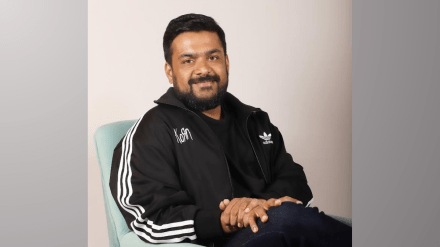
Talent and culture marketplace Collective Artists Network has been on a shopping spree, first acquiring Galleri5 and Terribly Tiny Tales and then announcing an exclusive partnership with gaming studio Parallel Studios to hone capabilities to blend art and technology. Vijay Subramaniam, founder & group CEO, spoke to Geetika Srivastava about the challenges facing the creator economy and how new technology can be deployed to tackle at least some of them. Edited excerpts:
You have been on a buying spree, acquiring Terribly Tiny Tales (TTT) and Galleri5 more recently. What potential do you see in these businesses?
Galleri5 will further our ambitions in technology and AI in the creator and content space. It will make content creation, dissemination and discovery a lot more scalable. TTT has been a pioneer in short-format, snackable, fictional storytelling for a decade. It has some very meaningful properties and we are trying to unearth the next set of storywriters and give them a platform through it. So one is deep-diving into the space of content and writing and scaling a media platform, whereas the other is a scalable tech company that can enable content creation, discovery and dissemination.
It’s been clear that the media and entertainment business so far has been very service-driven, and scale has been questionable. We want to build Collective as a new media company that has been centred around pop culture, which is a consolidation of whatever is going to pop in the digital content and creator space. That’s what is driving our growth — we want to establish a company in this form in the new media space.
Could you highlight some trends and challenges in the talent space? How do you plan to navigate them?
We are in the business of market creation and the biggest challenge is that we don’t have a reference point as a conglomerate. We’ve had other talent management companies, influencer management companies, content production companies, but when all of this comes together to birth a conglomerate, that’s when we see that there is no reference point. For me, the real challenge is to innovate in the category and find a soft spot between advertising, platform and content.
The challenge is interesting because it is unique when you put all these pieces together. I am of the firm belief that as the internet grows, content creation has to start becoming a significant value add to the economy of the country — it has to impact consumer decisions. That’s why we also started a fund to impact the consumer as a whole through content.
Given the wide range of your clients, how do you expect to cater to the specific needs of each segment — artistes, brands, investors?
We think of ourselves as the Reliance of creators. Imagine you are entering a supercharged ecosystem and each part caters to a different consumer cohort — there is something catering to the capital markets, something for content, something for technology, and something for advertising. We are trying to build an all-encompassing new media network. Think of what WPP had done back in the day in the advertising business, or what content creation houses in the West like Paramount did. For us, it was really about finding the sweet spot between content and commerce, and that’s where I feel scale will be maximised.
How do you see the creator economy shaping up? Are you incorporating influencers in your talent line-up?
That’s where the real challenge is. That’s what our role is — trying to power a new economy. You have to look at how you have to skill people to be ready for that. That’s where TTT and Galleri5 also come in, as the former has a robust masterclass training academy for writers, visual designers, etc. The latter will help us power a lot of creators in BigBang.Social with technology and creative tools for images, and that use AI to increase speed and efficacy. The more quality that you have that comes into the world of content, the more creators will get funded to become celebrities and known personalities. That’s the aim — can we make 100, 200 celebrities a year? Somebody could be a chef today in Jabalpur, can we make them a star in the culinary segment?
So that’s really the idea behind scaling. Back in the day, Indian Idol did this with TV. If we can find the next set of creators who can earn a living doing this, that is success.
Consumption of regional content has been on the rise. How are you adapting your strategy to cater to this growing audience?
We manage a podcasting group from Karnataka, we manage Marathi content creators. India is not a country where you can afford to scale a business with just one or two languages. You need to find scale across the board. That’s what our technology play will enable and that’s what we are looking to solve. Has it been solved in the country at scale? The answer is no. After several decades, South cinema is getting recognition across India. That has taken over 70 years to establish. The internet will increase adoption and acceptability, and technology will play a significant role in discovering and unearthing regional talent. Hyperlocal will be the name of the game as far as content is concerned.
Can you speak on the role of technology in this space?
For us, that is the whole premise of the Under 25 Universe (a learning technology company) or the Galleri5 acquisition, or even BigBang.Social. Technology will be the strongest enabler in the space. Today, Under 25 powers micro and nano student transactions, it also powers youth surveys, where brands can look at setting their GenZ strategies through the network. Galleri5is powering affiliate commerce, providing image tools, is helping with AIficiation of cataloguing and providing trend, future-forecasting tools as well. BigBang.Social is connecting the best creators with the best brands for collaboration. In short, our ecosystem today is a tech-enabled one.
Follow us on Twitter, Instagram, LinkedIn, Facebook


