



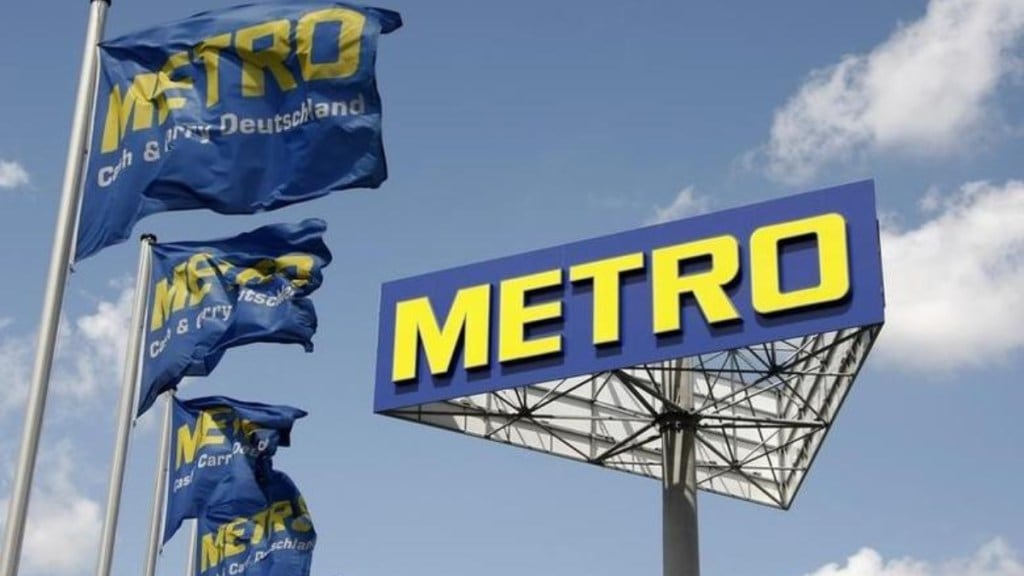
German firm Metro’s exit from India by selling its 19-year-old business venture – Metro India (Metro Cash and Carry India) – to Reliance Retail Venture (RRVL) hasn’t come as a surprise to anybody.
The Indian market has been a graveyard for many foreign retail giants in the past. French B2B major Carrefour lost its appetite for India within a short period of four years while the world’s largest retailer, Walmart, first let go of 56 employees in January 2020 and a few months later, it sold the wholesale business to Flipkart. And Amazon, which bought a 49% stake in Future coupons, hasn’t been able to make any headway and is still battling it out in Indian courts.
Also Read: Reliance Industries share price rises as RIL set to acquire in Metro AG’s India biz for Rs 2,850 crore
Metro India’s story, in comparison, is more long-drawn. Launched with much fanfare in 2003, Metro India posted its first net profit of Rs 217.4 crore only in FY19 – a good sixteen years since its launch. But within two years, it was back in the red in FY21 with a net loss of Rs 23.33 crore (sales Rs 6,503 crore).
According to reports, the writing on the wall was clear for quite some time. The parent company decided to pull the plug on the India business and was actively looking for buyers for at least the last six months. The management was said to be in talks with wholesale retail giants like Reliance, Tata, Avenue Supermarts and Amazon.
In fact, if one goes by reports, its valuations may have also taken a knock. In May, it was reported that Metro was seeking around $1.5-$1.75 billion for Metro India. The final deal, meanwhile, happened at just $344 million (Rs 2,850 crore).
However, the news is not that bad for Metro as it will see a transaction gain of about €150 million ($159 million) and higher earnings per share are anticipated, the company said in a statement late Wednesday.
“Metro aims for leading market position in wholesale. Due to the increasing market consolidation, accelerated digitalisation and intense competition, Metro India operations would not fit Metro’s core growth strategy in the future. Therefore, further growth for Metro India would be best achieved with an owner who has a more suitable network and presence in India,” the global press release said.
Also Read: Comprehending consumer demand and retail trends for 2023
Where did things go wrong? Industry experts said that in the fast-moving consumer goods (FMCG) industry, distribution of products led by players in general trade is very strong, efficient and has reached up to the last leg of the country and 85% of the business is done by general trade. Metro Cash and Carry, despite its 31 wholesale centres in 21 cities, wasn’t able to expand its business significantly to make profits, they said.
To make matters worse, margins in the FMCG sector are already wafer thin and Metro Cash and Carry’s strategy to give discounts and follow predatory pricing to improve sales required an endless flow of funds, said Dhairyashil Patil, national president at All India Consumer Products Distributors Federation. “There is a limit to which one can continue with such strategies over the long run,” he added.
While the Indian retail market is growing at 8% CAGR and is expected to reach $ 1.3 trillion by 2025, the unorganised sector’s share may go down to 75%, organised retail to 15% and e-commerce to 10%, according to a Bernstein report. In recent years, many new players like Reliance, and Udaan have entered the wholesale and retail market and have rapidly expanded their retail footprint in the eB2B space too, thus disrupting and altering the dynamics of the game.