




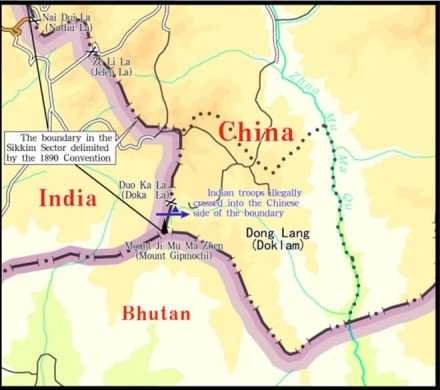
Doklam standoff: China and India have agreed to disengage, ending around two months long standoff between Indian and Chinese soldiers in Doklam region of Sikkim sector. In a statement, India’s Ministry of External Affairs said, “In recent weeks, India and China have maintained diplomatic communication in respect of the incident at Doklam. During these communications, we were able to express our views and convey our concerns and interests. On this basis, expeditious disengagement of border personnel at the face-off site at Doklam has been agreed to and is ongoing.”
China also confirmed the development but stressed that India has withdrawn troops. China’s Foreign Ministry said Indian troops had withdrawn to the Indian side of a disputed border area, where soldiers of both countries were locked in standoff for over two months.
Talking to reporters, China’s foreign ministry spokeswoman Hua Chunying said the Chinese troops would continue to patrol the disputed Doklam region, Reuters reported.
The timely decision to disengage came ahead of a summit of BRICS nations – an international group of nations including Brazil, Russia and South Africa – in China early next month. The standoff threatened to affect the BRICS summit as Prime Minister Narendra Modi is scheduled to visit Beijing for the Summit.
Chinese state media also confirmed the decision by two countries to disengage. China’s People’s Daily Online said, “China and India agree to end over 2-month-long standoff in Donglang (Doklam); China confirms India has withdrawn its troops.”
China’s CGTN reported, “China and India have agreed to end the standoff in the Donglang area of both countries’ border, China’s Foreign Ministry confirmed on Monday. As of 2:30 p.m. Monday, India has withdrawn border personnel at the face off site at Donglang. The Foreign Ministry also said that China will continue to protect its territorial sovereignty.”
The standoff had started after China’s People’s Liberation Army tried to build a road in the Doklam area, which belongs to Bhutan and is strategically significant for India. China claims the as its own. The standoff threatened to derail decades of trust-building between New Delhi and Beijing after the fallout of 1962 war.
In the weeks following the beginning of standoff, Chinese media had launched a propaganda war against India, threatening New Delhi with war even. However, India didn’t respond to China’s verbal attacks and, instead, insisted on finding a peaceful solution to the issue through dialogues.


