



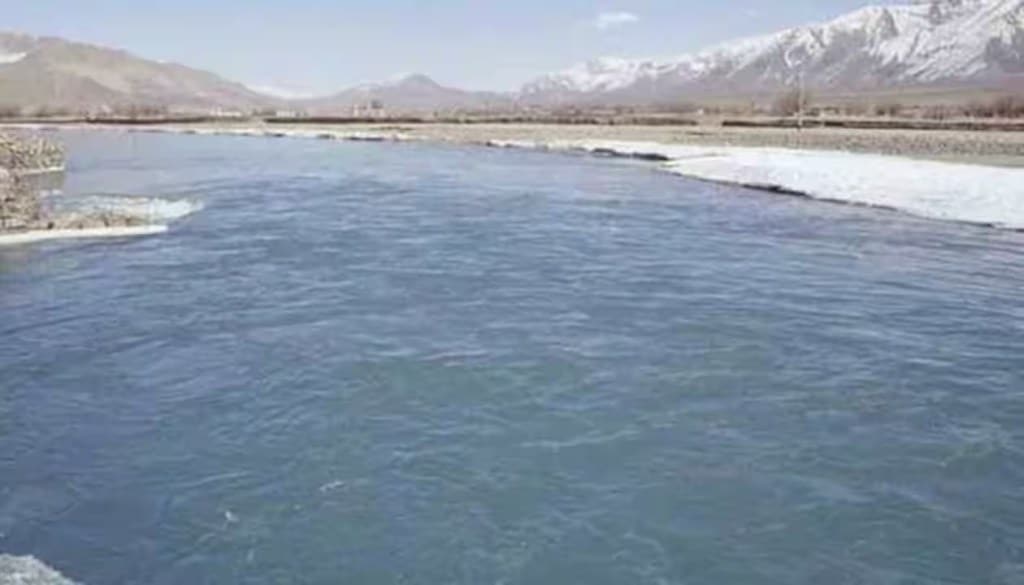
With the construction of the Shahpur Kandi Barrage on the River Ravi, which was pending completion for 45 years, India has effectively stopped the water flow to Pakistan, which signifies a strategic shift in water allocation from February 25, according to media reports.
This move would benefit the region of Jammu and Kashmir for agricultural purposes.
The Shahpur Kandi barrage — located in Punjab’s Pathankot district — was held up by a domestic dispute between Jammu and Kashmir and Punjab. But that led to a substantial chunk of water that belongs to India, going to Pakistan all these years.
India has exclusive rights to the water of the Ravi River under the 1960 Indus Water Treaty signed under the supervision of the World Bank. Under the treaty, India also has full rights over the waters of Sutlej and Beas, while Pakistan has rights over the waters of Indus, Jhelum and Chenab.
In 1979, Punjab and Jammu and Kashmir governments signed an agreement to build Ranjit Sagar Dam and downstream Shahpur Kandi barrage to stop water to Pakistan.
The agreement was signed by Sheikh Mohammad Abdullah, then chief minister of Jammu and Kashmir and his Punjab counterpart Parkash Singh Badal.
In 1982, former Prime Minister Indira Gandhi laid foundation for the project, which was expected to be completed by 1998.
While construction of Ranjit Sagar Dam was completed in 2001, Shahpur Kandi barrage couldn’t materialise and water from Ravi river continued flow into Pakistan.
In 2008, Shahpur Kandi project was declared national project but construction work started in 2013.
Ironically, the project was again stalled due to disputes between Punjab and J&K in 2014.
Finally, in 2018, the Centre mediated and brokered an agreement between the two states. The work, which started soon after, is finally completed.
The water which was going to Pakistan will now be used to irrigate two key districts of Jammu and Kashmir — Kathua and Samba. 1150 cusecs of water will now irrigate 32,000 hectares of land in the Union Territory.
Jammu and Kashmir will also be able to get 20 per cent of the hydel power generated from dam.
The 55.5 meters high Shahpurkandi Dam is part of a multi-purpose river valley project that includes two hydel power projects with a total installed capacity of 206 MW. It is built on river Ravi, 11 km downstream of Ranjit Sagar Dam Project.
Besides Jammu and Kashmir, the waters from the dam will also help Punjab and Rajasthan.